
Lucky Drama - Shorts & Rewards
DigitnesiaEntertainment
4.82.78K Reviews
- Version
- 1.3.2
- Installs
- 1.00M
- Age Rating
- Everyone
Screenshots
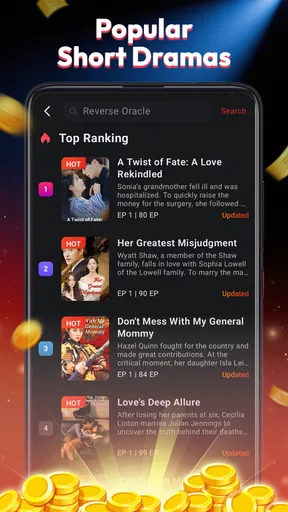
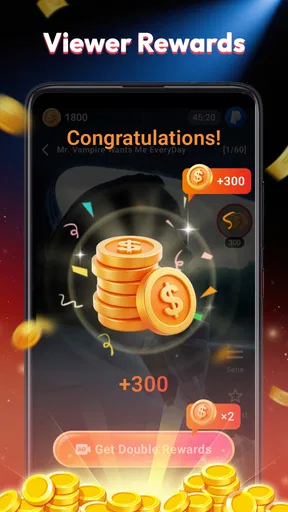
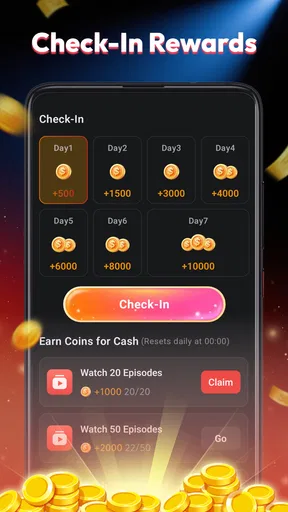
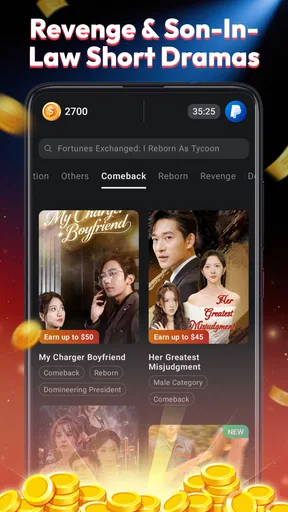
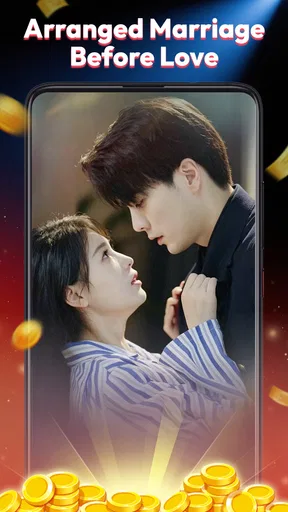


Our Review of Lucky Drama - Shorts & Rewards
 Analysis by Appyee
I approached Lucky Drama - Shorts & Rewards as a small entertainment app rather than as a replacement for a full streaming service. Its appeal is straightforward: open a short drama, watch in brief sessions, and use the app’s reward-focused experience as part of that routine. That combination can be attractive when I have a few spare minutes, but it also means I judge the app by more than its promise of quick viewing. I want to know whether the watching experience feels comfortable, whether the reward element stays understandable, and whether I remain in control of my attention and personal choices.
Created by Digitnesia, this free entertainment app is aimed at an Everyone audience and runs on Android 8.0 or later. It has reached over 100 thousand installs and holds a 4.8 average from around 7.9 thousand ratings, with roughly 440 written reviews. Those figures suggest that the basic idea has found an audience, although popularity alone does not tell me whether it will suit the way you watch video. My experience with apps in this space is that the details between episodes matter just as much as the headline concept: loading, navigation, interruptions, reward explanations, and the amount of control given to the viewer all shape the daily experience.
How the short-drama format feels in everyday use
The most natural way to use Lucky Drama is in small gaps rather than during a planned movie night. I can imagine opening it while waiting for an appointment, taking a short break, or winding down before sleep. Short episodes make that easy because I do not need to commit to a long program. The format also creates a quick sense of progress: one viewing session can feel complete even when I only have limited time.
That convenience comes with a trade-off. Short dramas often move quickly, so the emotional setup, conflict, and payoff may be compressed compared with a conventional series. I found that this style works best when I want a light, immediate distraction rather than deep character development. If you prefer carefully paced television, long-form films, or a large catalog organized around established shows, a conventional streaming service will probably be a better fit.
The reward angle changes the way I pay attention. Instead of treating every episode as entertainment alone, I naturally notice what the app asks me to do next and what progress I have made. That can make casual viewing feel more purposeful, but it can also make the experience less relaxing if I start checking rewards instead of following the story. My practical advice is to decide before opening the app whether you are there primarily to watch or to explore the reward system. That simple distinction helps prevent the interface from directing the whole session.
A realistic routine would be watching a few short episodes during a commute, provided you are not the person driving, then stopping when you reach your destination. Another useful routine is to reserve the app for a fixed break and close it afterward. This is more satisfying than opening it repeatedly whenever you feel bored, because the reward structure can otherwise encourage longer sessions than you originally intended. The app works best when it fits around your day rather than becoming the default response to every idle moment.
What makes the concept appealing
The strongest part of the idea is the low barrier to entry. You do not need to plan an evening around it, and the free price makes trying it less of a commitment. For someone who enjoys dramatic stories but does not want to search through a large streaming library, a short-form catalog can feel refreshingly direct. The reward layer may also give viewers a reason to return, especially if they like visible progress and repeated small goals.
I also appreciate that this format can suit different attention patterns. A viewer who loses interest during long episodes may find short dramas easier to finish. Someone who wants background entertainment during a break can sample a story without setting aside a large block of time. On the other hand, people who dislike cliffhangers, repeated prompts, or reward-driven interfaces may find the same design tiring. The format is not universally better; it is simply more convenient for a particular kind of viewing.
Where the experience needs patience
Reward-based entertainment requires more interpretation than ordinary video viewing. I would not assume that watching automatically translates into a benefit without reading the on-screen explanation for each activity. Before investing time, I would look for the stated steps, any visible progress indicator, and the conditions attached to an action. This is not a criticism of one specific screen; it is a sensible habit whenever an app connects viewing with rewards.
I would also avoid treating the reward element as income. The wording presents it as a viewing reward, not as a dependable job or financial service. That distinction matters. If you are downloading the app because you need reliable earnings, this is the wrong category of product. If you simply enjoy short dramas and regard any reward progress as an extra, your expectations are more realistic.
Another point is attention. Short episodes are easy to start, and reward loops can make it tempting to continue after the entertainment has stopped being enjoyable. I recommend setting a time boundary and checking whether you are still watching because you like the story. This is one of the less obvious trade-offs: the app’s convenience is also what makes it easy to fit several sessions into a day without noticing.
Trust, controls, and making informed choices
For me, trust begins with visible choices rather than a high rating. When I install an entertainment app, I pay attention to the screens shown during setup, the account options presented, and the way the app explains any action that involves viewing, rewards, or personal information. A polished interface is useful, but it should not replace careful reading. In Lucky Drama, I would treat every permission request and account prompt as a decision point, not as something to accept automatically.
The app’s Everyone age classification makes it broadly approachable, but an age label is not a substitute for supervision or personal judgement. Families should still consider how much screen time is appropriate and whether the reward-focused design is suitable for younger viewers. I would especially recommend explaining that rewards inside an entertainment app should not be confused with guaranteed money. That conversation is more valuable than relying on the age category alone.
Because the app is free, I would be particularly alert to the choices surrounding advertising, notifications, and account access. I am not adding claims about specific permissions or data practices that are not visible here; instead, I recommend checking the permission dialog and privacy information on your own device before proceeding. If a request seems unrelated to watching short dramas, pause and decide whether the convenience is worth granting it. Android’s system settings also let you review and change permissions later, which is a useful control many people forget to use.
Notifications deserve the same attention. A viewer who wants occasional entertainment may not want reminders pulling them back throughout the day. I would start with notifications limited to what I genuinely need, then adjust them if they become distracting. This is a practical way to preserve user agency without abandoning the app altogether. The same principle applies to account controls: use the least information and access needed for the experience you actually want, and review the available settings after the first session rather than assuming the initial setup is permanent.
When I reach a reward screen, I look for clarity before acting. I want to understand what counts as completion, whether the action is optional, and what the app expects me to do next. If the wording is easy to follow, the process feels more trustworthy. If it is vague or pushes me forward without a clear explanation, I would skip that step and continue only with ordinary viewing. A reward should remain an optional extra, not the price of entry for enjoying the drama.
Small habits that improve control
One useful habit is to separate entertainment time from account decisions. I would watch a little first, learn how the app feels, and only then decide whether creating or connecting an account is worthwhile. This avoids giving away more information before I know that the catalog and format suit me. It also makes it easier to stop using the app if the viewing experience does not meet my expectations.
A second habit is to check the app after updating it. The current version is 1.2.2, and updates can change layouts, prompts, or settings even when the main purpose remains the same. I would take a moment after an update to review notifications, permissions, and any account-related screens. That is more reliable than assuming a setting will behave exactly as it did during the previous session.
A third is to keep reward progress psychologically separate from spending decisions elsewhere. If an offer, prompt, or external action ever asks for more commitment than you expected, stop and reassess rather than continuing because you have already invested viewing time. The sunk-cost feeling is especially easy to trigger in apps built around small repeated tasks. Walking away from a step is a valid choice.
Finally, I would use the app on a connection and device setup that match my circumstances. Short video can consume attention and battery quickly, so I would avoid starting an episode when I need the phone for navigation, an important call, or an urgent task. If playback becomes inconvenient, the reward is not worth the frustration. The practical benefit of short content disappears when it interferes with something more important.
Who should try it, and who should skip it
I think Lucky Drama is most suitable for viewers who already enjoy short dramatic stories and want a free, easy-to-start entertainment option. It is also a reasonable choice for people who like small progress systems and do not mind checking the conditions around viewing rewards. The Everyone classification and support for Android 8.0 or newer make it accessible to a wide range of Android users, while the short format suits irregular schedules.
I would point elsewhere if your priority is a deep library of long series, premium production, uninterrupted viewing, or a carefully curated experience without reward prompts. A standard streaming platform is usually better for planned viewing and stronger continuity between episodes. A conventional video service may also be preferable if you want broad creator variety rather than a focused short-drama experience. Lucky Drama is not competing on every one of those points; its value comes from quick sessions and the added motivation of rewards.
I would also skip it if you are highly sensitive to notifications, dislike watching content to complete tasks, or tend to spend more time chasing digital incentives than enjoying the program. The free price removes a financial barrier, but it does not remove the cost of attention. That is the main personal trade-off I would consider before installing it.
My view after weighing the trade-offs
Digitnesia has built an app around a clear, narrow idea: short dramas with a reward-oriented viewing experience. That clarity is a strength because I quickly understand why I might open it. The free access and short format make experimenting easy, and the strong store response indicates that many users find the concept appealing. Still, I would not judge it solely by its average rating or install count. The important question is whether its rhythm matches your habits and whether you are comfortable making deliberate choices around prompts, permissions, notifications, and account use.
My recommendation is cautious but positive. Try it if you want brief dramatic entertainment and can treat rewards as secondary. Start with a short session, read each choice instead of tapping through automatically, and review your notification and permission settings. If the stories keep you interested without making you feel managed by the reward loop, it can earn a place in your occasional entertainment routine. If you want a calmer, more predictable viewing experience, stay with a traditional streaming alternative.
In the end, Lucky Drama - Shorts & Rewards is best understood as a lightweight entertainment app, not a guaranteed earning tool or a full replacement for television streaming. I would recommend it to a friend who enjoys quick dramas and likes measurable progress, while making clear that personal control matters more than chasing every available reward. Used with that mindset, it is an accessible way to fill small breaks. Used without limits, its convenience can easily turn into another source of screen time.
Privacy and Permissions
See what permissions an app requests and how it handles your data.
- Identity
- find accounts on the device, add or remove accounts
- Calendar
- read calendar events plus confidential information, add or modify calendar events and send email to guests without owners' knowledge
- Contacts
- find accounts on the device
- Wi-Fi connection information
- view Wi-Fi connections
- Other
- view network connections, create accounts and set passwords, full network access, control vibration, prevent device from sleeping, toggle sync on and off, Google Play license check
Verdict
Strengths of Lucky Drama - Shorts & Rewards
- Short episodes are easy to watch during brief breaks.
- The reward system adds motivation to keep exploring new content.
- Simple navigation makes the app accessible for casual viewers.
- Frequent content updates can provide fresh dramas to discover.
- Personalized recommendations may help users find appealing stories.
Limitations of Lucky Drama - Shorts & Rewards
- Rewards may require considerable time or repeated actions to collect.
- Some content and features may be limited by region or account status.
- Advertisements can interrupt viewing and make browsing feel slower.
- The large drama catalog may vary in quality from one series to another.
- Reward terms and redemption rules may change without much notice.
Other Releases by Digitnesia
View All
Lucky Translate
Productivity4.7
Similar Picks in This Category
View All
Google Play Games
Google LLC3.9

Netflix
Netflix, Inc.4.8

YouTube Kids
Google LLC4.2

Disney+
Disney4.4

Prime Video
Amazon Mobile LLC4.7

Steam
Valve Corporation3.2
Frequently Asked Questions
What is Lucky Drama - Shorts & Rewards?
Lucky Drama - Shorts & Rewards is an entertainment app focused on short-form video content, typically offering brief drama episodes and other quick clips designed for mobile viewing. After installing it, users can browse available titles, watch episodes, and interact with reward-related features. The exact catalog, earning options, and availability may vary by country, device, account status, and app version.
Can I really earn rewards by watching videos in Lucky Drama - Shorts & Rewards?
The app may provide points, coins, or other rewards for completing activities such as watching content, checking in, or participating in promotions. However, rewards should not be treated as guaranteed income. Eligibility rules, limits, withdrawal requirements, and supported payment methods can change, and some activities may offer only small amounts. Always read the in-app terms before spending time or sharing personal information.
Is Lucky Drama - Shorts & Rewards free to download and use?
The application may be available to download without an upfront charge, but free access does not necessarily mean every feature is completely free. It can include advertising, optional purchases, premium content, or restrictions on certain episodes and reward activities. Before confirming a payment, check the store listing and the app’s purchase screen carefully, especially if children or other users share your device.
Does Lucky Drama - Shorts & Rewards require an account or personal information?
Some features may work without registration, while reward collection, synchronization, or withdrawals can require an account. Depending on the sign-in method, the app may request information such as an email address, phone number, or profile details. Review the privacy policy and requested permissions before continuing, and avoid providing sensitive information unless it is clearly necessary for the feature you intend to use.
Is Lucky Drama - Shorts & Rewards safe for children and suitable for every device?
The short-drama catalog may contain themes, language, advertising, or promotional material that are not appropriate for all ages. Parents should review the app’s age rating, content descriptions, and reward mechanics before allowing children to use it. Compatibility, performance, subtitles, and download availability can also differ between Android and iOS devices, so install it only from an official app store and keep the app updated.
